You’ve probably heard the old adage “feed a cold, starve a fever?” You may have even someone go as far as to tell you that in Canterbury Tales it reads “fede a cold and starb ob feber.” I want to talk to you about this because I want people to encourage people to think more critically about things that have been passed down the historical grapevine.
The short version is that you cannot find that in Canterbury Tales. It’s one of those situations where the source was cited incorrectly, and people just continued to cite it without checking the primary source. You would be astonished at how often that happens. Hippocrates never said “Let thy food be thy medicine” either.
Even if we could find where it was said, it most likely translates to “feed a cold and die of fever,” meaning if you provoke your cold, it will get much worse. Steorfan spelled about fifty unusual ways means “to die” in Old English. They didn’t have a word for starve, it came later and steorfan was its root word.
There is an exceedingly long precedent of preparing special foods for people with fevers. Gourds, cucumber, and endive were recommended as foods that were both cooling and moistening without astringency and they were included in many dishes for feverish people. Pepon was one of the names used for the sun-ripened gourds that were used for food and medicine in Europe before contact with the Americas. When Europeans encountered pumpkins and squash in the Americas, they were lumped into this category.
In a recipe in the 13th-century Andalusian cookbook, the author advises the reader that a recipe containing the juice of roasted gourds and other cooling herbs and foods” is given to feverish people as a food and takes the place of medicines” and shares the following receipt:
A Muzawwara [Vegetable Dish] Beneficial for Tertian Fevers and Acute Fevers
Take boiled peeled lentils and wash in hot water several times. Put in a pot and add water without covering them. Cook and then throw in pieces of gourd, or the stems of Swiss chard, or of lettuce and its tender sprigs, or the flesh of cucumber or melon, and vinegar, coriander seed, a little cumin, Chinese cinnamon [cassia], saffron and two ûqiyas of fresh oil; season with a little salt and cook. Taste, and if its flavor is pleasingly balanced between sweet and sour, [good;] and if not, reinforce until it is equalized, according to taste, and leave it to lose its heat until it is cold and then serve.1 One way to reinforce a prepartion that is not sour enough is to make verjuice.2 Verjuice is the juice epressed from unripe grapes. It is quite sour and leaves that astringent mouthfeel behind.
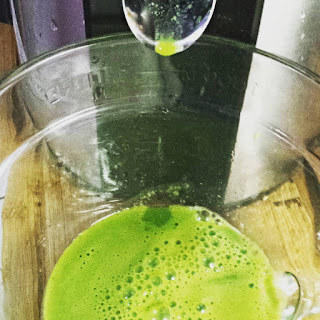
Very often we see diaphoretic distillates such as mint or yarrow mixed into foods or beverages to the body’s effort to safely sustain fever.
Giving red, sour juices during fevers – likely due to the various anthocyanins and cooling organic acids in these preparations is also a tradition in many cultures. The ancient Iranians and the Andalusians recommended pomegranate syrup for phlegmatic fevers. 3Hans Sloane wrote in his Natural History of Jamaica published in 1701 that the women of that country used the calyces of hibiscus for making wines that were to be given for “Fevers and Hot Distempers, to allay Heat and quench Thirst.” Lady Clark of Tillypronie recommended cranberry juice as a febrifuge. The Latin name for cranberry means “acid berry” and Scottish people used the European variety a great deal.
Seeds were also commonly included in the materia medica. In fact, you most frequently saw it recommended that “in Winter if the Hearbs be not to be had, the Seeds will serve.”4 Practitioners prepared emulsions with the greater cold seeds (gourd, watermelon, cucumber, and melons) and the lesser cold seeds (endive, succory, lettuce, and purslane)5 for people with fevers.
References:
- Anon. The Book of Cooking in Maghreb and Andalus in the Era of Almohads. Translated by Martinelli, Candida. 2012 translation. Al-Andulus, Spain: CreateSpace Independent Publishing Platform, ca. 1400. ↩︎
- Source for Making Verjuice: Muusers, Christianne. “Verjuice: Not Wine, nor Vinegar.” Coquinaria, September 16, 2006. http://www.coquinaria.nl/english/recipes/verjuice.htm ↩︎
- Anon. The Book of Cooking in Maghreb and Andalus in the Era of Almohads. Translated by Martinelli, Candida. 2012 translation. Al-Andulus, Spain: CreateSpace Independent Publishing Platform, ca. 1400. ↩︎
- Kent, Elizabeth Grey. A Choice Manual of Rare and Select Secrets in Physick and Chyrurgery Collected and Practised by the Right Honorable, the Countesse of Kent..; Published by W.I., Gent. 1st ed. London, England: Printed by G.D., and are to be sold by William Shears …, 1653. http://name.umdl.umich.edu/A47264.0001.001. ↩︎
- Culpeper, Nicholas. Pharmacopoeia Londinensis: A Physicall Directory, or, A Translation of the London Dispensatory Made by the Colledge of Physicians in London. London, England: Printed for Peter Cole and are to be sold at his shop, 1649. ↩︎
 Domestic Medicine