This is a bread recipe from a manuscript of Sir Hugh Plat’s written in approximately 1560.
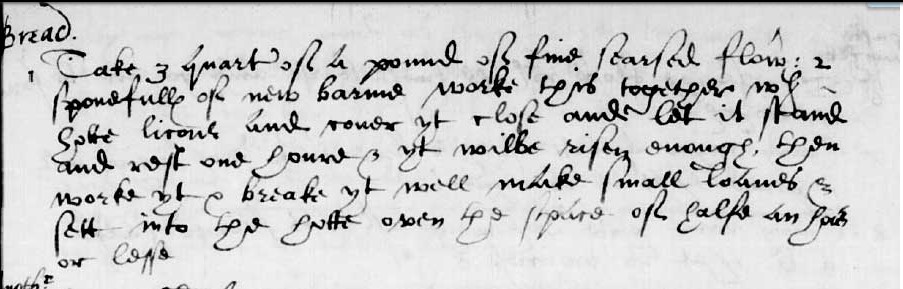
Take 3 quart or a pound of fine searced flowr: 2 spoonefulls of new barme worke this together wth hotte licore and cover yt close and let it stand and rest one houre & yt wil be risen enough, then worke yt & breake yt well make small loaves & sett into the hotte oven the space of halfe an hour or lesse.
You can read more about its transcription here. The transcriptionist used white flour, which is more appropriate to the receipt, but today I am using a mixture of rye and barley flour because I want to see how well ale barme works with heavier flours.
I have been baking bread for at least forty years now and have my own ideas going into this. For example, the transcriptionist kept adding water to accommodate flour toward the end, but I know the bread formula. 1 lb of flour (aproximately 3.5 cups) will incorporate 2.1 cups of liquid.
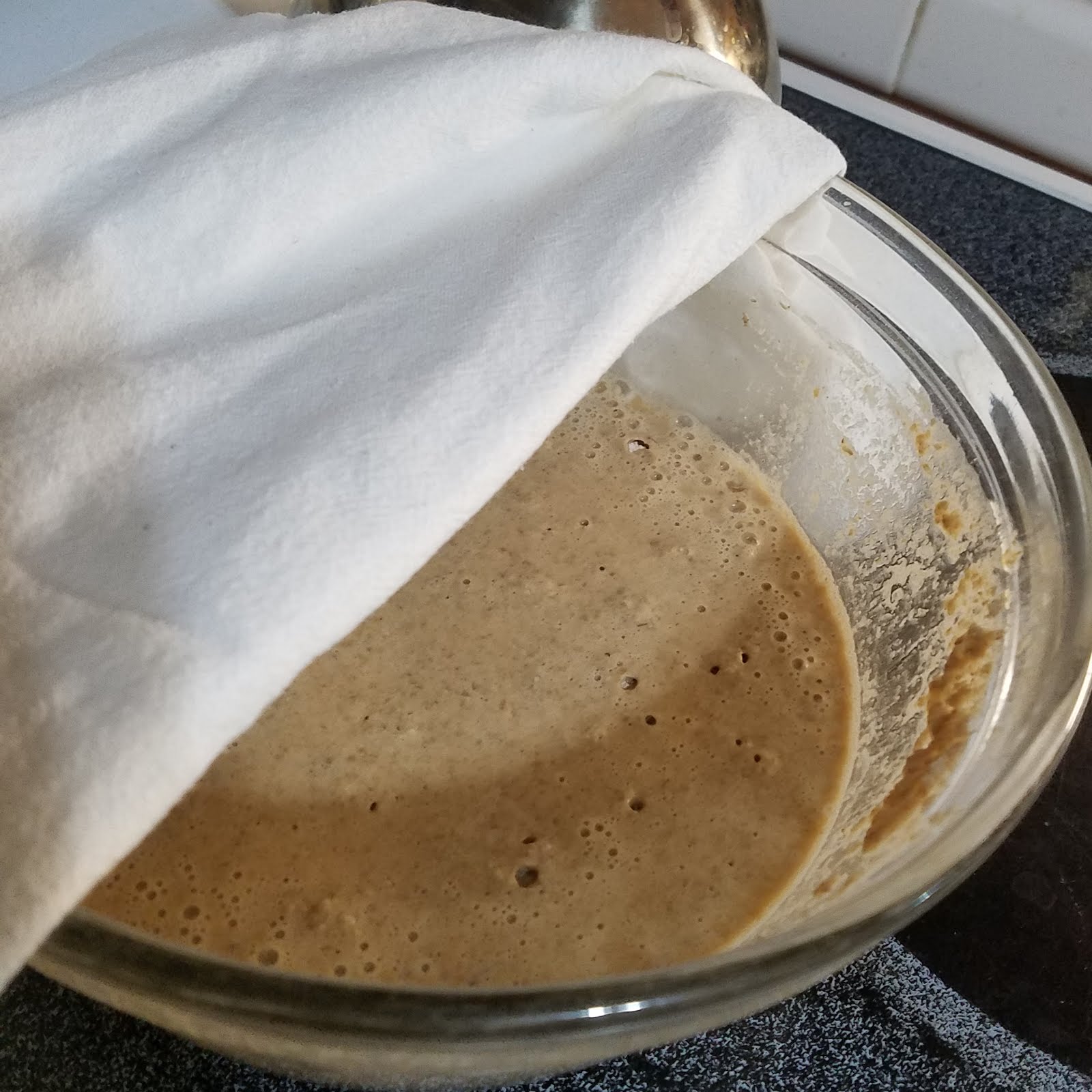
I made this sponge with one cup of ale barme, one cup of warm water, and two cups of rye flour and let it set for an hour. Then I kneaded in the rest of the flour (1.5 cups) until the dough was ready and let it rise again.
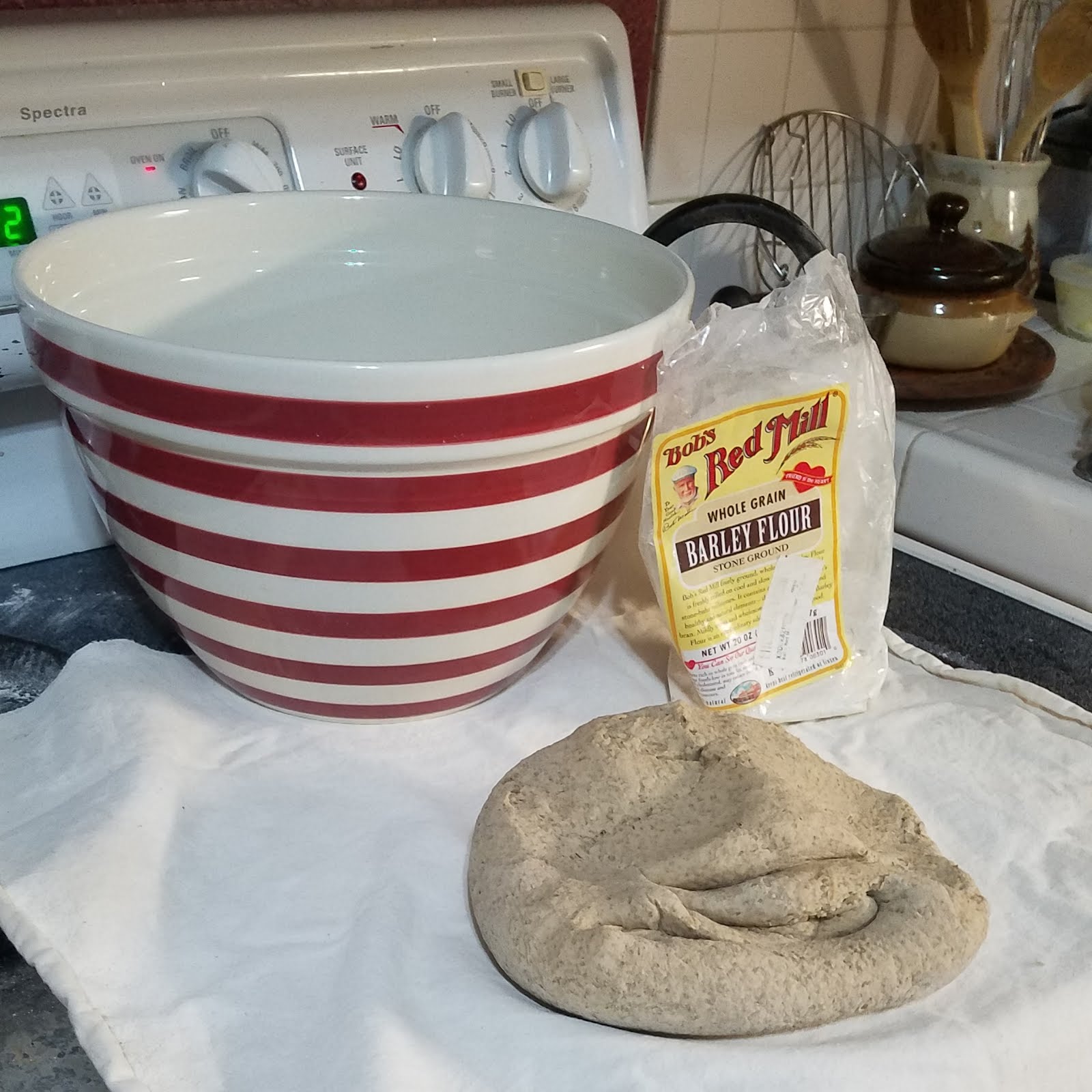
I struggle with telling people how long to knead a loaf. I have been kneading bread since I was a wee one and I usually just go by feel. The bread is smooth, elastic, and if you poke it the indentation will spring back pretty quickly. You can try the windowpane test test where you pull off a small chunk and stretch it out to see if it breaks.
I can promise that eventually you will do this often enough that you will just be able to tell by the feel of it in your hands. That’s one of the reasons I never let my kitchenaid do the work even though I have one. I also must tell you that it pained me not to add some salt at this point, but the recipe didn’t call for it.
Then I veered from the recipe a bit because I didn’t think it was looking promising. I put it in a bowl for a second rise and it didn’t achieve much.

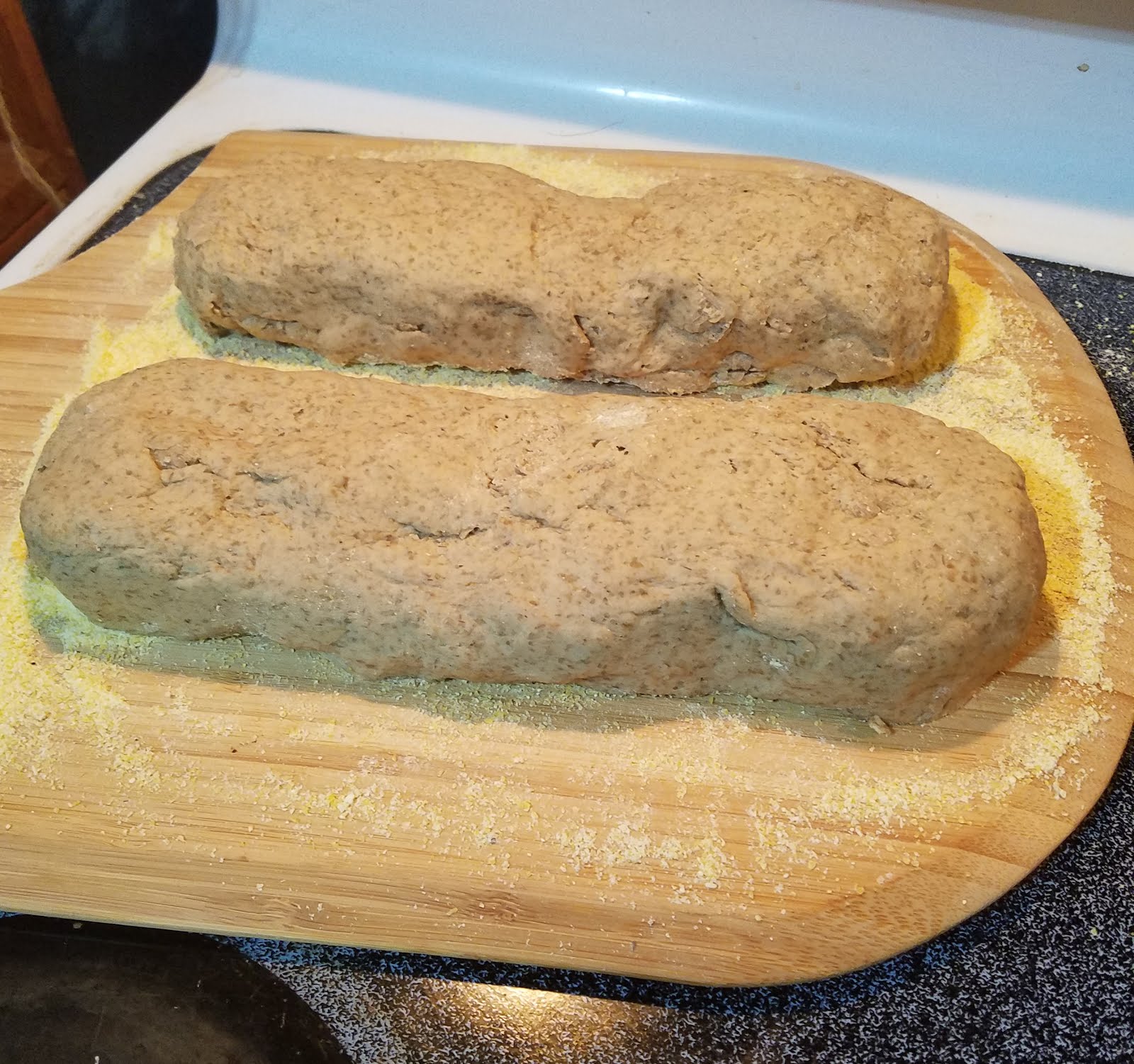
I shaped the loaves on my peel and let them rise a bit longer. I have to tell you at this point I really didn’t think it was going to work.
20 minutes before I wanted to bake my bread, I put my baking stone in the oven on one shelf and my broiler pan on the shelf underneath it and preheat it to 450 degrees.
When I was ready to bake the loaves I slid them from the peel onto the baking stone, poured some hot water into the broiler pan, and shut the oven quickly. I must tell you these were the most solid loaves I have ever worked with; I didn’t need to put the meal on the peel, but oh well.
Baking time varies of course according to the size of the loaf. I baked these loaves for 20 minutes. I bake my bread until it has reached an internal temperature of 190 F. If you don’t have a thermometer, you can tell they are done when you are able to pick them up (with an oven mitt) and thump them and they sound hollow.
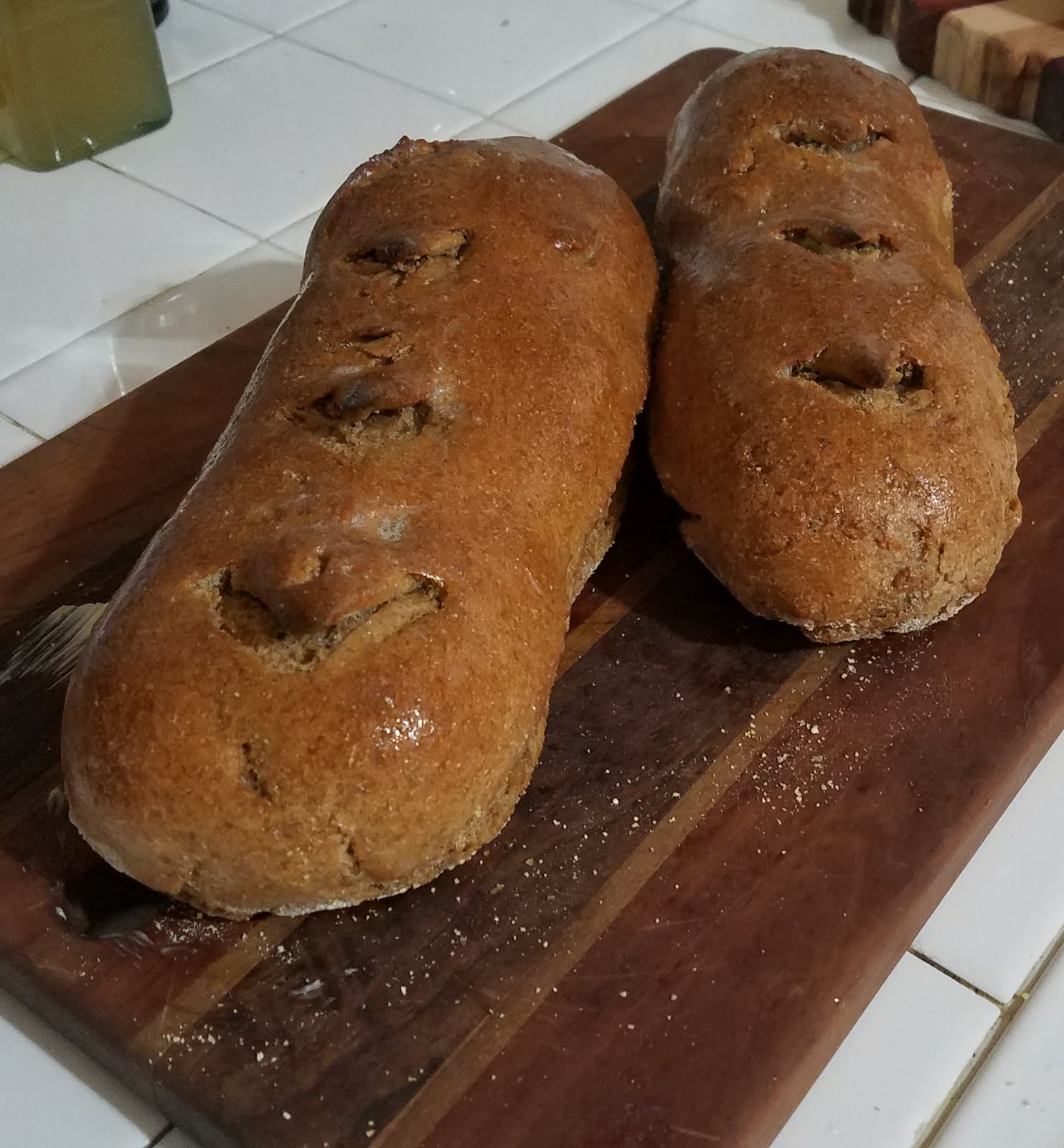
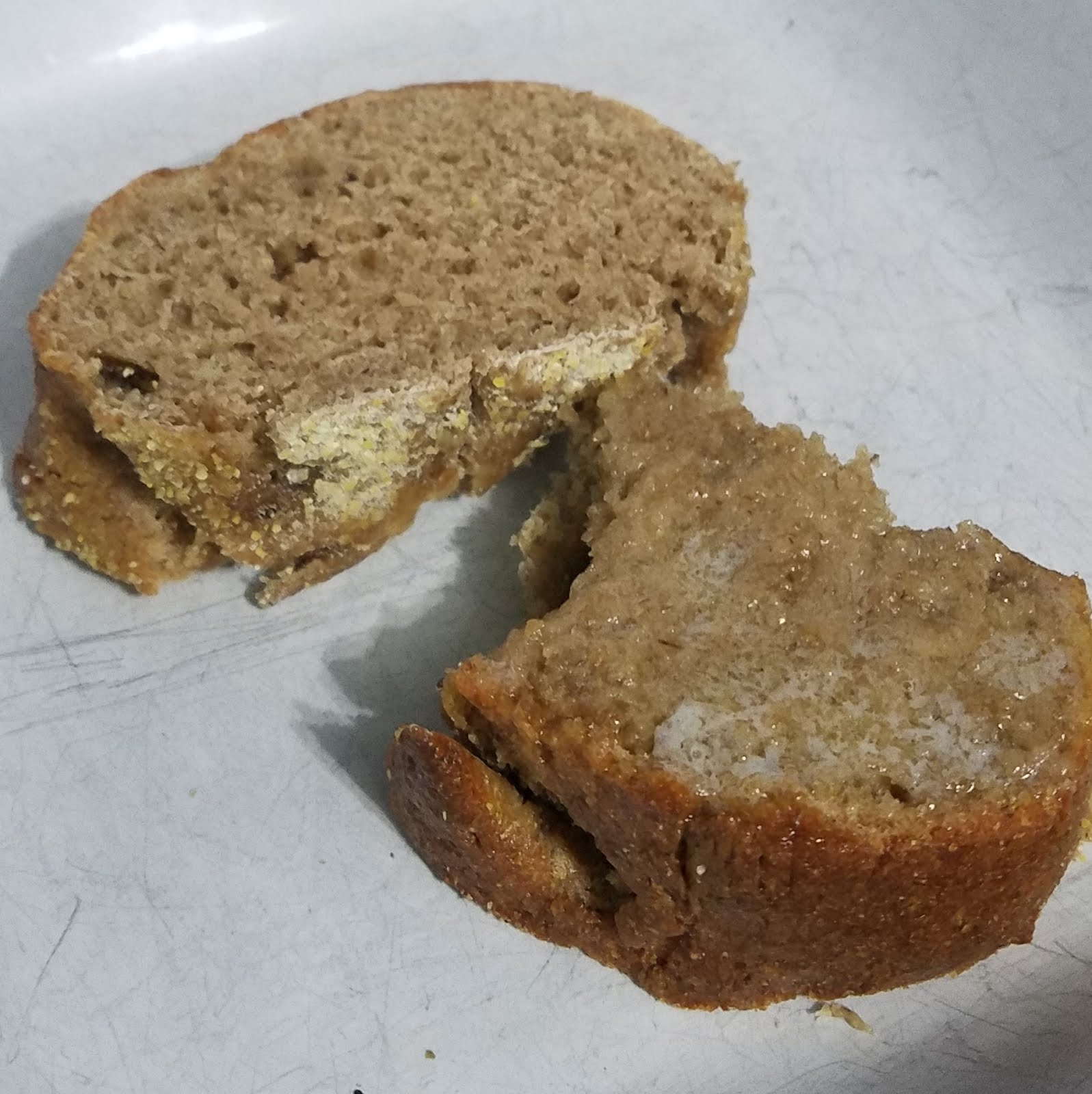
I must tell you that no one was more surprised than me when they ended up looking like this. I mean they aren’t my best work, but it worked. It is definitely rusatic peasant bread compared to the artisan peasant loaves I usually make that incorporate white flour. It’s also got a bite to it. The ale contributes to that a bit, I think. I think next time I try I will use all ale barm as my liquid
 Domestic Medicine
You must be logged in to post a comment.