My people were dirt poor. My grandfather lived in a little shack on the banks of the Maquoketa River, with his parents and eleven siblings. His mother helped deliver the babies in that little shantytown and helped their mothers keep them well, which is cool because three of my grandparents lived in that town. It’s possible I wouldn’t be here if it weren’t for her.

Her name was Myrtle Ralston and from what I have heard she never put on airs or called herself a midwife. She just did what had to be done. I am sure she probably learned it from her mother Clara, who was a MacDonald. She was a feisty Scot and reminds me very much of the stories I have read about Biddy Early right down to being married to an Irish dude who drank way too much.
My maternal great-grandmother’s maiden name was Haworth which is thought to mean hedge or enclosure keeper.** She was a direct descendent of the Quaker elder George Haworth. Sadie knew some tricks too. She kept her premature baby alive by incubating him a little wooden box and raised her bakers dozen of children without ever having seen a doctor.
That doesn’t make me special where I come from.
I was reared on home remedies, but so were most people in my area. My best friend’s mom was a midwife, too. Our grandmothers and mothers taught us to take care of ourselves because in that community no one could afford to go to the doctor. That is part of the history of domestic medicine and ignoring it is unacceptably disrespectful to all the caregivers who worked hard to keep their families alive.

In my teens, I moved about 30 miles to a “wealthier” community. I had never lived around people who had money. I also learned that some professional “herbalists” had responded to the fact that people felt that they were not being well-served by modern medicine, by writing herbal books and marketing the lost art of folk remedies.
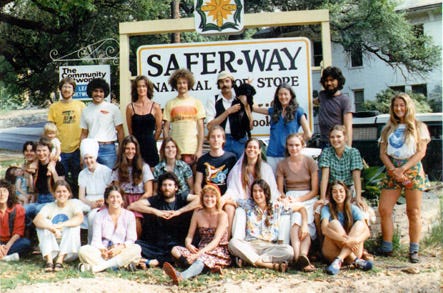
It is interesting to think about now… how the network of skill sharing that kept the destitute communities afloat had broken down in communities where there was money to pay the doctors and the pharmacist. I can definitely see that the medical market preyed on those people and undermined their confidence in their ability to take care of themselves, but so did the “herbalists.”
That was my first exposure to the idea that many historical narratives played out in this country depending on how much money you had and where your people came from.
The idea of this “lost art of folk remedies” was very confusing to me.
There was a health food store in this community, so I hung out at the shop and tried to figure it out. There’s a great story about my folks finding a bag of dried catnip in the kitchen closet next to the coffee. That is not the kind of folk remedy my family was used to.
The shop owner was a history guy and he knew what he was making money on was trendy reductionism. He directed me to read older books and told me to take the newer herbals a grain of salt. Then he launched into a story about Roman medicinal salts and what that term actually means.
1 grain of salt = .065 grams, if you are interested.
I was completely into that idea because history is one of the things I hyperfocus on. I taught myself Middle English with my Mom’s copy of Canterbury Tales and our set of encyclopedias when I was in elementary school.
So I went about my life and learned from the history books. I raised my kids the way my people have always raised kids and when people asked me stuff, I tried to help them out. I sold ointments to other history nerds at events full of history nerds. In 1999, I went to a conference with my shop owner friend. It was demoralizing. It left me feeling excluded and that was the extent of my interaction with The Herbal Community™ for a long time.
Some of you people have some particularly insulting ideas about who “counts” as an herbalist and who doesn’t. I stepped back in 2005 because I had concerns about the Traditional Medicines Congress and I didn’t want those ideas about lineage to set the stage. Nowadays anyone who can take a picture of a plant and put it on social media seems to count, so my concern was unwarranted.

One thing I know for sure. The historical witchy herbalist that modern herbalists talk about didn’t exist. The people handing out herbal prescriptions were the professional physicians of their time. Every caregiver rich and poor learned how to take care of their family with herbal medicines that they either made or bought from a shop or market vendor.
People only turned to their cultural service magicians or “healers” when their herbal remedies weren’t cutting it, and that still doesn’t mean a witch. Even Catholic priests knew the charms and could work ord coniurātion and people would call them when the caregiver of the house and the physician had failed.
In the 1800s, physicians started writing books for other physicians who were choosing to be “herbal physicians” versus those who were choosing to be “mineral physicians.” They were sometimes called herbalists or herb doctors. From what I can tell this is the historical practice most modern herbalists best line up with.
So basically, the herbalists of the 1980s fought for the right to practice a version of historical medicine in this country. That deserves respect. I am sure it was not easy. The problem I see is that they didn’t stop there. In their desperation to stop themselves from being accused of practicing medicine, they stepped across some cultural boundaries and started using problematic terms to describe themselves.
It is not entirely their fault. Academics were constantly misrepresenting herbal medicine in their publications. The most erroneous thing I have ever seen written on the subject of the old herbals was written in 1982 by folklorist Richard Dorson who said “The great herbals of Elizabethan England and Renaissance Europe in a sense standardized the herb lore of the Middle Ages.”
That’s nonsense. Those herbals were written by scientists and physicians. They standardized the practice of medicine and botanical pharmaceutical usage up to that point. But the 1980s were a period of time when the medical/academic establishment was pushing back against the hippies and their nature medicine, so that’s the shit they were shoveling.
Herbal medicine became “ herbal lore” and herbalists became “keepers of the lore” and too many terms referring to ritual healing specialists got conflated with the term “herbalist.” And that’s problematic as hell because some of you are good herbalists, but most of you are not healers.
That brings me to the very problematic use of the term “elder” to describe the people who established the modern herbal profession. This word means a lot more to some people than many of you seem to understand.
I despise the way that word gets thrown around because it means something to me. It implies that the person using it is someone who has a position of cultural authority due to age and experience. I know the old medicine of my people. I know cech galair, but I would never presume to call myself an elder.
If you studied with someone and you think of them that way, then I suppose it’s your prerogative to name them as such. I question whether a cultural term is appropriate outside of that context, but whatever. Just don’t expect your colleagues to give them that power. I strongly disapprove when someone is introduced as one of “our herbal elders.”
Your elders are #notmyelders.
I owe my knowledge to those who tend the ancestral fires. I have been told many times my lineage means nothing to the The Herbal Community™ so don’t expect me to fall all over myself honoring yours.
If you do give people that power, you had best hold them to the obligations that come with it. Once a person is granted that kind of authority it is their responsibility not to perpetuate or ignore problematic behaviors.
That’s just the way it is. If you present yourself as an herbal founder or elder, people are going to start expecting more of you. If you don’t want to take on that aspect of the gig, I don’t know what to tell you.
The age of accountability is going to be rough on you.
Aside from the fact that some truly harmful people have held the floor for far too long, imposing that small group of “elders” on all herbal practitioners is disrespectful as hell to many healers who have gained their knowledge through their culture.
You can’t marginalize whole groups of people like that.
There’s a lot of pushback and posturing going on and I feel like I am in the middle of a fight between two friends who are divorcing. It’s possible people on both sides of the situation have some valid things to say.
I guess my first question is when and where are we going to talk about it?
This was written five years ago before covid and the response I saw to that crisis from most herbalists, convinced me that it would probably be best if the field imploded on itself.
*Name re-Gaelicized because fuck Anglicisation

**Bannister, John. The Salamanca Corpus: A Glossary of Cornish Names (1869–1871). Truro,: Netherton, 1871. pp 66.

***The Complete Herbalist written by Oliver Phelps Brown in 1879 is a good example of this.

****Herbalist is one of the least problematic words modern practitioners can use to describe themselves. I will throw out that whole history soonish.
 Domestic Medicine