
Michaelmas is a quarter day that’s not terribly exciting if you aren’t into angels, so I thought I would take this time to introduce the idea of the quarter days more thoroughly before I talk about it. I am a big believer in celebrating as many feast days and festivals as you can squeeze into your life. It doesn’t really bother me that they have religious associations. I am an American, I can reboot anything.
Customs pertaining to festivals and holidays served community building functions, and the equally significant role of keeping the agricultural and household tasks on schedule. The great part about living now is that we can look through folklore and folkways for the fun stuff and go on with our bad selves without being bogged down by any harmful dogma.
The quarter days serve an economic function as well. Rents were collected quarterly, and full-time workers’ contracts began and ended on quarter days. In Northern England and Scotland seasonal workers were hired on Candlemas and paid on Michaelmas. In southern England, Wales and Ireland seasonal farm workers contracts began on Our Lady day of the year and ended on Christmas.
There were often hiring fairs associated with the quarter days and they were celebrated by the landowning class with feasting.
And when the tenants come to paie their quarter’s rent,
George Gascoigne, The Posies of George Gascoigne 1575
They bring some fowle at Midsummer,
A dish of fish in Lent,
At Christmasse a capon, at Michaelmassse a goose,
And somewhat else at New Year’s Tide, for feare their lease flie loose!
Landlords have been landlording for a long time, I guess.
As time moved on, laws were enacted to ensure that all debts and financial agreements were settled on the quarter and so judicial terms began to line up with them. In fact, if you google the older spelling Mighelmas, you will pull up a lengthy list of account books and state papers written in the medieval era. And for you Americans who think we didn’t do this…I invite you to consider the history of the fiscal quarters of the corporate year.
These celebrations are often cited as being “Celtic” but there is debate about that. The continental Celts did not appear to divide their year into four seasons. The Coligny calendar indicated the observance of the cold half of the year (gaimred) associated with the feminine and the warm half of the year (samrad) associated with the masculine.
The quarterly celebrations are unique to Ireland and the British Isles and seemed to predate Christianity at least in Ireland. It’s worth pointing out though that the monastic scribes who wrote the Old Irish mythologies down in the 5th century CE were experts at glossing things over in favor of Christianity, and we really don’t know much about pre-Christian customs.
By medieval times it was all based on the liturgical calendar, and there are plenty of primary source legal documents that show that folk in Ireland observed Michaelmas as a contract day.
Prior to the 1800s, uniform national practices hadn’t been codified, so like many things the exact dates varied regionally. In the financial records of a London church in 1487 you will find the terms defined as “At Christmas, At owr lady day, At Midsommer, And at Mighelmas.” On the other hand, Hannah Glasse was also born in London and in her cookbook, she divided the year into Candlemas quarter, Midsummer quarter, Michaelmas quarter and Christmas quarter.
Oxford College in London and Trinity College in Ireland have always observed the Hilary Term, while at St. Andrews in Scotland they call it the Candlemas term, and at Cambridge they call it the Lent Term. Generally speaking they played out in the regional patterns listed below:
Southern England, Wales and Ireland
Our Lady Day (Feast of the Annunciation, March 25)
Midsummer Day (Feast of St. John the Baptist, June 24)
Michaelmas Day (Feast of St. Michael, September 29)
Christmas Day (Feast of the Nativity, December 25)
Northern England and Scotland
Candlemas (Feast of the Purification, February 2)
Whitsunday (Pentecost, May 15)
Lammas (Feast of First Fruits/Loaf Mass, August 1)
Martinmas (The Feast of St. Martin, November 11)
Ireland (observed prior to the 5th century CE)
Imbolc (Lá Fhéile Bríde, February 1)
Lá Bealtaine (May Day, May 1)
Lá Lúnasa (Feast of First Harvest, August 1)
Lá na Marbh (All Hallows, November 1st)
United States
Recognized as Fiscal Quarters only
Michaelmas Day
I thought I would explain the way I make the day my own, without all the angels and saints. Michaelmas was the time of year when the harvest was in, the work of the summer was done, and the people had their profits to spend. According to the play “Michaelmas Term” written by Henry Middleton in 1607, some of that money was spent on initiating lawsuits at Michaelmas. The play is satirical in nature, so we won’t take him too seriously, but it could serve as a reminder to get your legal affairs in order.
It was a time when people had money to spend though and so the hiring fairs could turn into quite the market experience. I take stock of my household situation by doing inventory of the freezer, pantry, and my herbal preparations which is simply good quarter day accounting. . My growing season is a bit later than most of the UK, so I still have a bit of time to gather anything I am short on.
There’s also an association with dragons that I am all over. They tell me the dragon represents our fears and taming it means we have conquered our fears. I do have a one-shot written up for George the Paladin and his adventuring company who are sent on a mission to tame a fierce green dragon which ends with a feast.
There are a few foods associated with Michaelmas. One is the roasted goose, mentioned in the poem above. Now is the ideal time to “harvest” geese. They will start to get fatty as it gets colder. The Scottish have a Michaelmas Bannock because they always have a quarter cake.
The best story centers on blackberries. Before the jump from the Julian to the Gregorian calendar, Michaelmas was the 10th of October. The story goes that people believed that the devil put his foot on the blackberries on this day and that they were no good for picking after Michaelmas. When Michaelmas moved to September 29th, this custom stuck in some places and they call old Michaelmas the Devil’s Blackberry Day, or something like that. It’s similar to Púca Night in Irish mythology. I will talk about that when we get to All Hallows.
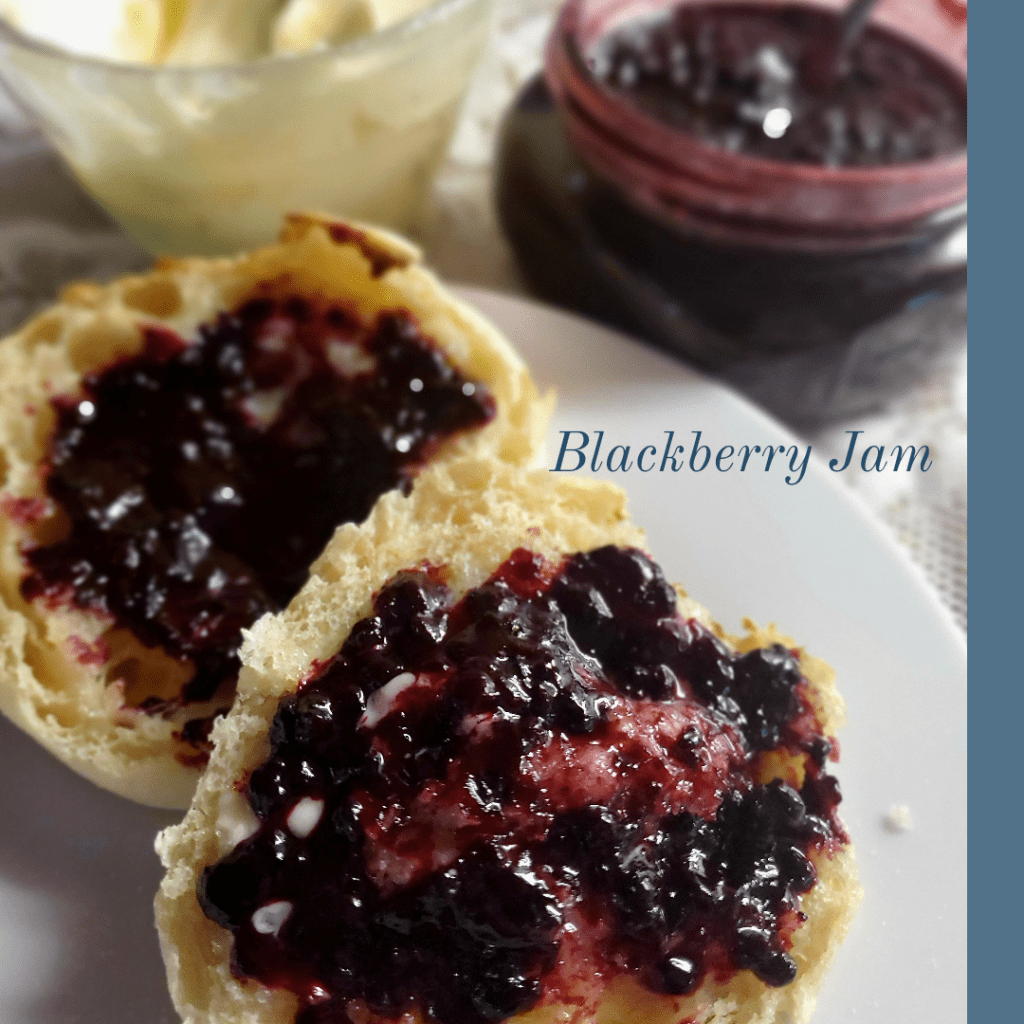
Many people put up a lot of blackberry preserves during the week before Michaelmas. I swear if you just give yourself over to secular seasonal festivities of all these yearly tasks organize themselves. I make blackberry jam. even if I must buy 5lbs of frozen berries because I am not in “wading through the bramble” condition. Blackberry jam is one of my five favorite things.
I will leave you with my recipe, but if you have never made jam before, read this before trying it. I use a lot less sugar to make jams that a lot of Americans, so you must understand why jam sets.
Ingredients
6 cups blackberries
1 cup apple cider
Juice from a lemon (3 Tbsp/1.5 ounces)
2 cups jam sugar
1 tbsp tablespoon powdered pectin (only needed if you can’t find jam sugar)
Directions
- Cook the blackberries in the cider until they are soft enough to mash. You could use water, but cider is my secret ingredient.
- Now do whatever you are going to do to break down the berries. I mash mine with a potato masher right in the pot I cooked them in.
- Add the sugar. If you can’t find jam sugar, you can just put some pectin in your sugar. Do not skip the lemon juice if you do this.
- I usually end up with 4 cups of crushed blackberries, so I use two cups of sugar. If you have more berries add sugar at a ratio of two cups berries to one cup sugar.
- Whisk the sugar mixture and lemon juice into the berries and bring this all to a boil.
- Let it simmer. Foam may start to form on the surface, and you want to skim that off until the bubbles start to foam a little and start to skim the foam.
- Simmer until it reaches set stage which is 220 °F (104.5 °C)
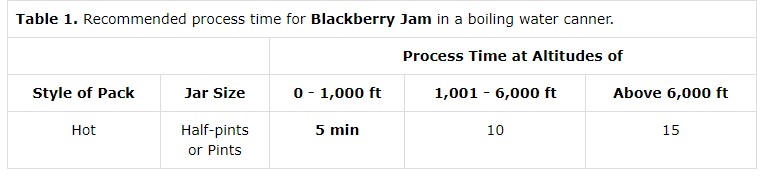
- Pour it into whatever jars you are using and process.
References:
Glasse, Hannah. The Art of Cookery, Made Plain and Easy: Which Far Exceeds Any Thing of the Kind Yet Published … London, England: W. Strahan, J. and F. Rivington, J. Hinton, 1774.
Littlehales, Henry. The Medieval Records of a London City Church (St. Mary at Hill) A.D. 1420-1559. Early English Text Societ. Kegan, Paul, Trench Trubner & Co., 1904. http://name.umdl.umich.edu/ajt8135.
 Domestic Medicine
You must be logged in to post a comment.